NHS waiting times stabilise despite growing patient list and £15.9bn infrastructure maintenance backlog.
Yesterday, the government published its 10-Year Capital Plan for Health and Social Care, highlighting a £15.9 billion maintenance backlog across NHS infrastructure and outlining how capital investment will underpin the 10-Year Health Plan. The need for greater investment in health and social care infrastructure was bolstered by this morning’s NHS waiting times figures.
The figures from the Referral to Treatment (RTT) dataset show that the total waiting list increased to 7.3 million in May 2026. Despite hospitals successfully closing a higher rate of open pathways (65.6%) within target, current figures continue falling well behind the statutory 92% standard, to be met by the end of the parliamentary term in 2029.
In May, the average waiting time across all specialties stood at 12.4 weeks. Patients waiting for elderly medicine services experienced the shortest delays, averaging 7.8 weeks.
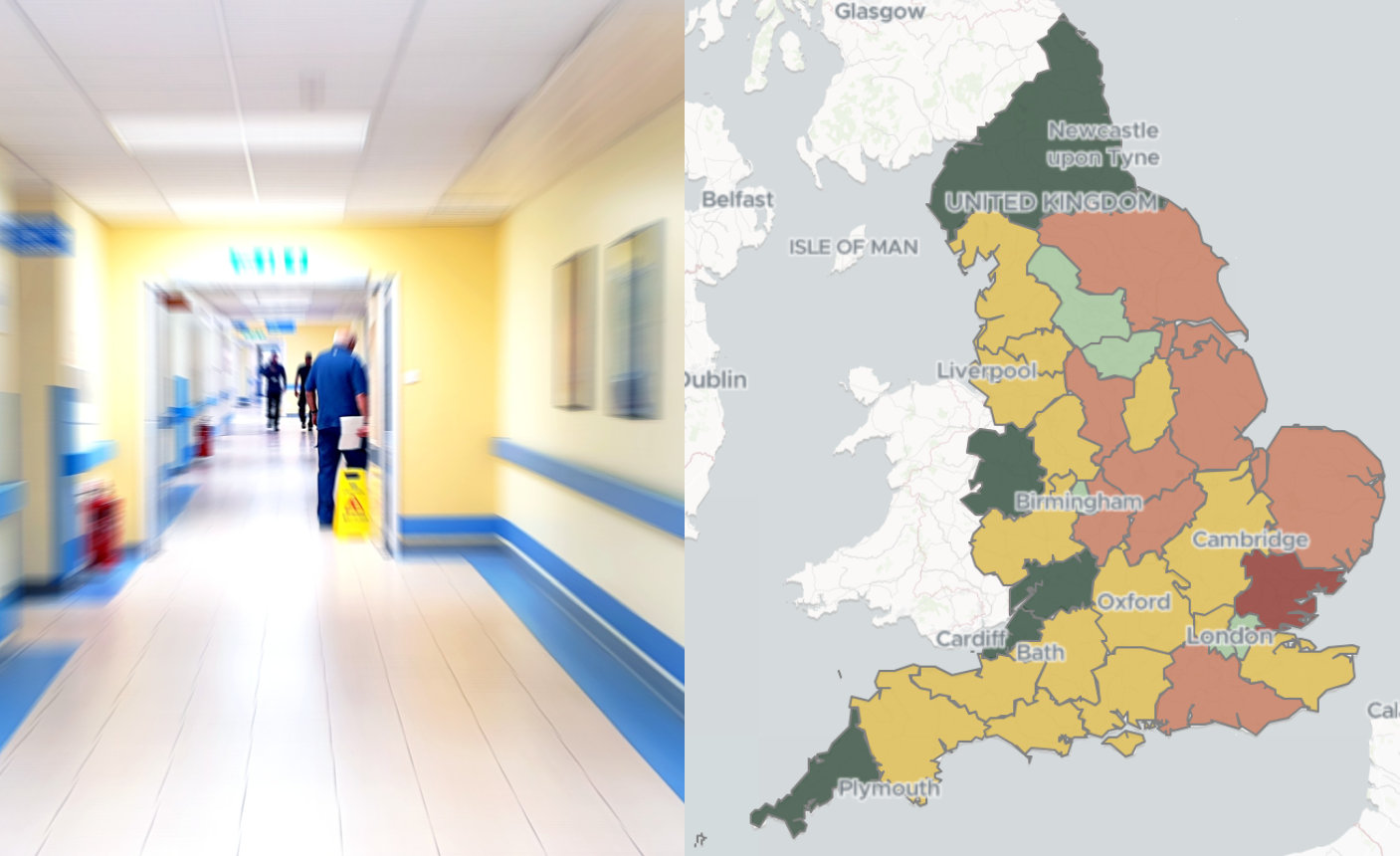
To uncover the geographical trends behind the national figures, the Polimapper data team has mapped the data at a local level. While the NHS Gloucestershire Integrated Care Board (ICB) performed best by closing 74.4% of pathways within 18 weeks, the NHS Mid and South Essex ICB recorded the lowest rate at 56.3%.
Geodata context
The Department of Health and Social Care’s newly released policy paper, the 10-Year Capital Plan, acknowledges that decades of underinvestment have left a £15.9 billion maintenance backlog. However, it sets out how targeted capital spending will be used to unlock the wider 10-Year Health Plan.
The strategy focuses on driving care from hospitals into the community through new and upgraded neighbourhood health facilities, alongside wider cross-government commitments to invest in health-associated housing and clean energy.
Professor Frank Smith, vice president of the Royal College of Surgeons of England (RCS England): “While there has been progress in reducing the longest waits overall, too many patients are still waiting longer than the NHS’s 18-week standard for the surgery they need.”
“Modernising NHS infrastructure is essential to bring down waiting times. The Government is right to recognise that years of under investment has left too many NHS buildings and facilities no longer fit for purpose. A long-term approach is sensible, but hospitals cannot wait much longer for the modern theatres, equipment and technology that allow surgeons and their teams to treat more patients sooner.”
Siva Anandaciva, director of policy, events and partnerships at The King’s Fund: “For too long, short-term thinking has shaped NHS capital strategy. […] So it is welcome that the government is taking a longer-term, more joined-up view of how health and care buildings, not just NHS-owned estate, can support better health and wellbeing.”
“But while this plan may provide a blueprint for the future, it remains unclear whether there is enough investment to turn the ambitions on paper into bricks-and-mortar improvements. With the NHS maintenance backlog now standing at £15.9 billion, serious questions remain about whether several unfunded commitments add up to one effective and credible capital plan.”