Deaths related to drug poisoning remain near record highs across England and Wales, driven by regional hotspots and a 14% annual increase in fatalities across the South East.
Source: Office for National Statistics | Launch visualisation
A new statistical release from the Office for National Statistics (ONS) shows a small year-on-year fall in total drug-poisoning deaths in England and Wales, from 5,565 to 5,519 in 2025. Nonetheless, fatalities remain 1.5 times higher than a decade ago and have doubled since 2010. Drug misuse figures show identical trends, with 3,615 deaths recorded in the last year.
Statistically, drug-poisoning deaths are fatalities involving any substance, spanning controlled and non-controlled drugs, prescription medicines, and over-the-counter pharmaceuticals. Drug misuse represents a narrower subset, defined either by a mental or behavioural disorder caused by illicit substance use, or by the involvement of substances controlled under the Misuse of Drugs Act 1971.
Cocaine is now the most frequently cited substance in the ONS dataset, causing 22% of all fatal poisonings (1,233), narrowly surpassing heroin and morphine at 1,210 deaths.
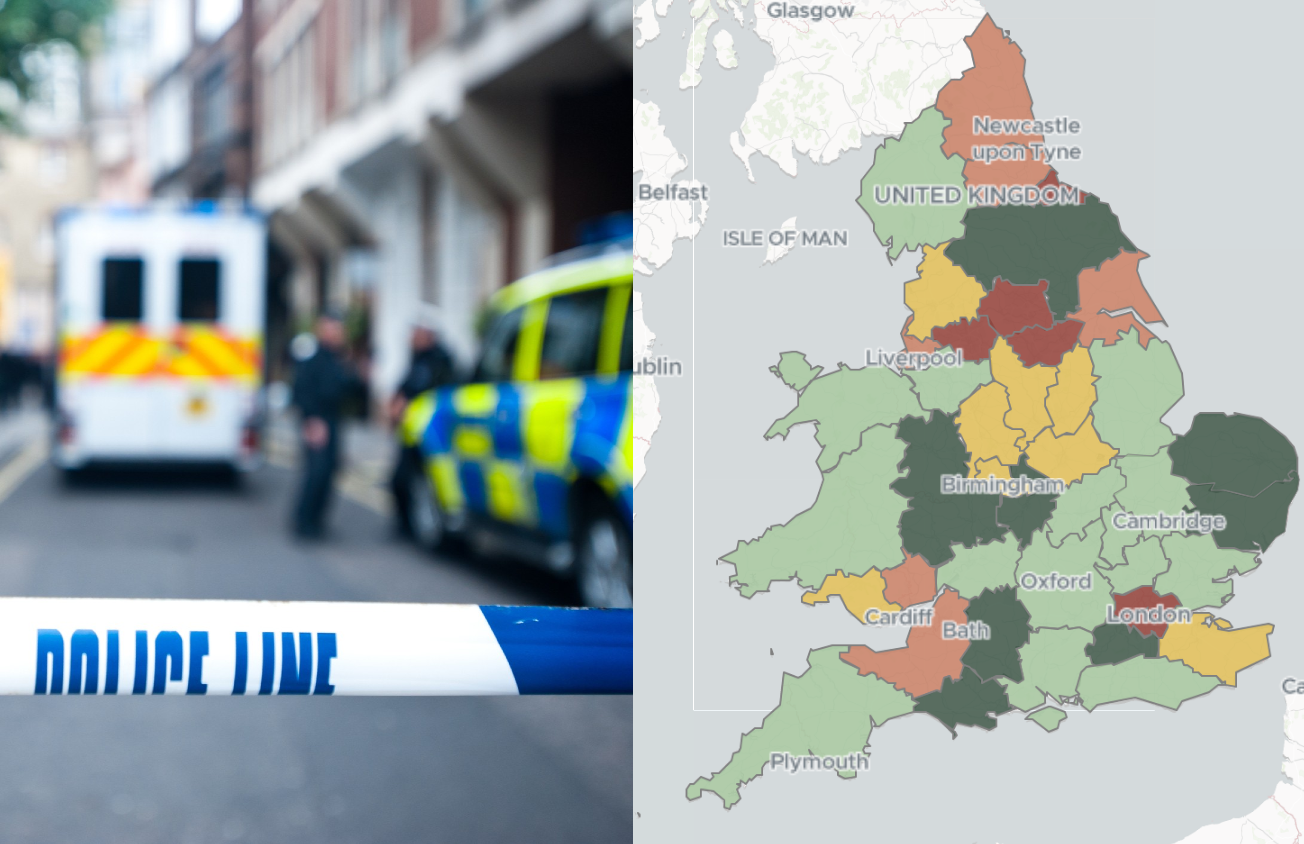
Across the regions in 2025, the North East registered the highest mortality rate at 135.2 deaths per million people. Meanwhile, the North West and the South East recorded the highest absolute death tolls, at 851 and 767 respectively.
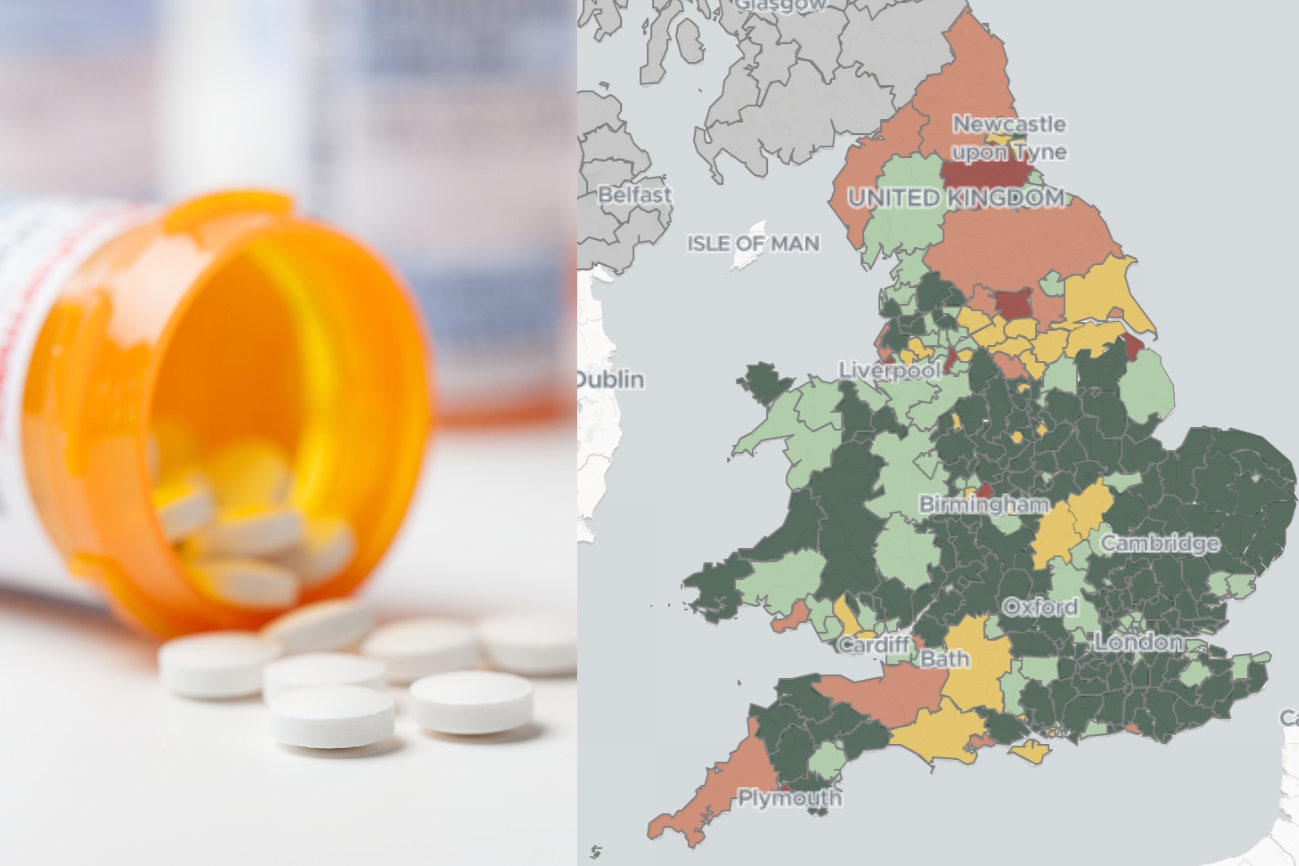
The data team at Polimapper has mapped the figures to the local authority level to highlight sub-regional disparities.
Between 2023 and 2025, drug-poisoning mortality rates were highest in Middlesbrough (29.1 per 100,000) and Blackpool (26.8 per 100,000), while drug misuse peaked in Chesterfield (20.0 per 100,000). Conversely, rates over the three-year window were lowest in New Forest (2.4 per 100,000). These rankings exclude areas where fewer than 10 deaths occurred.
Geodata context
Reacting to the ONS release, leading sector charities have urged the government to act.
Simon Phillips, chief executive at WithYou: “These deaths were preventable. Each number is a person, with family, friends, and a future, and their loss is felt every day. My thoughts are with them today. Any fall is welcome, but even one life lost is too many.) These deaths are preventable with the right support, treatment and policy-making.”
“Drugs policy needs political leadership. Responsibility is spread across at least six government departments, with no single minister in charge. Dame Carol Black’s independent review recommended appointing a single, responsible minister to hold the government to account. I urge the government to appoint a dedicated drugs minister with the authority to drive action across central Government.”
Dr Will Haydock, chief executive at Collective Voice: “After multiple years of austerity in England, Dame Carol Black’s independent review set out a five-year programme of investment and delivery that was required to ensure people could access the support they need and deserve.”
“Unfortunately, these gains are now at risk due to Government inaction. For over two years the Government has been largely silent on addiction, and has paused the planned investment programme, freezing funding at year three levels rather than continuing to follow the path laid out by the Independent Review, which has amounted to a real terms cut at a time when we are trying to support more people in treatment than ever before.”