New data reveals statistically significant variations behind Scotland’s falling fuel poverty rates.
Newly released local authority data from the Scottish House Condition Survey reveals that while Scotland’s overall fuel poverty rate dipped to 28.7% in 2024, geographic disparities remain. The national average across the 2022-24 period settled at 31%, but several local authorities registered rates significantly higher than the rest of the country.
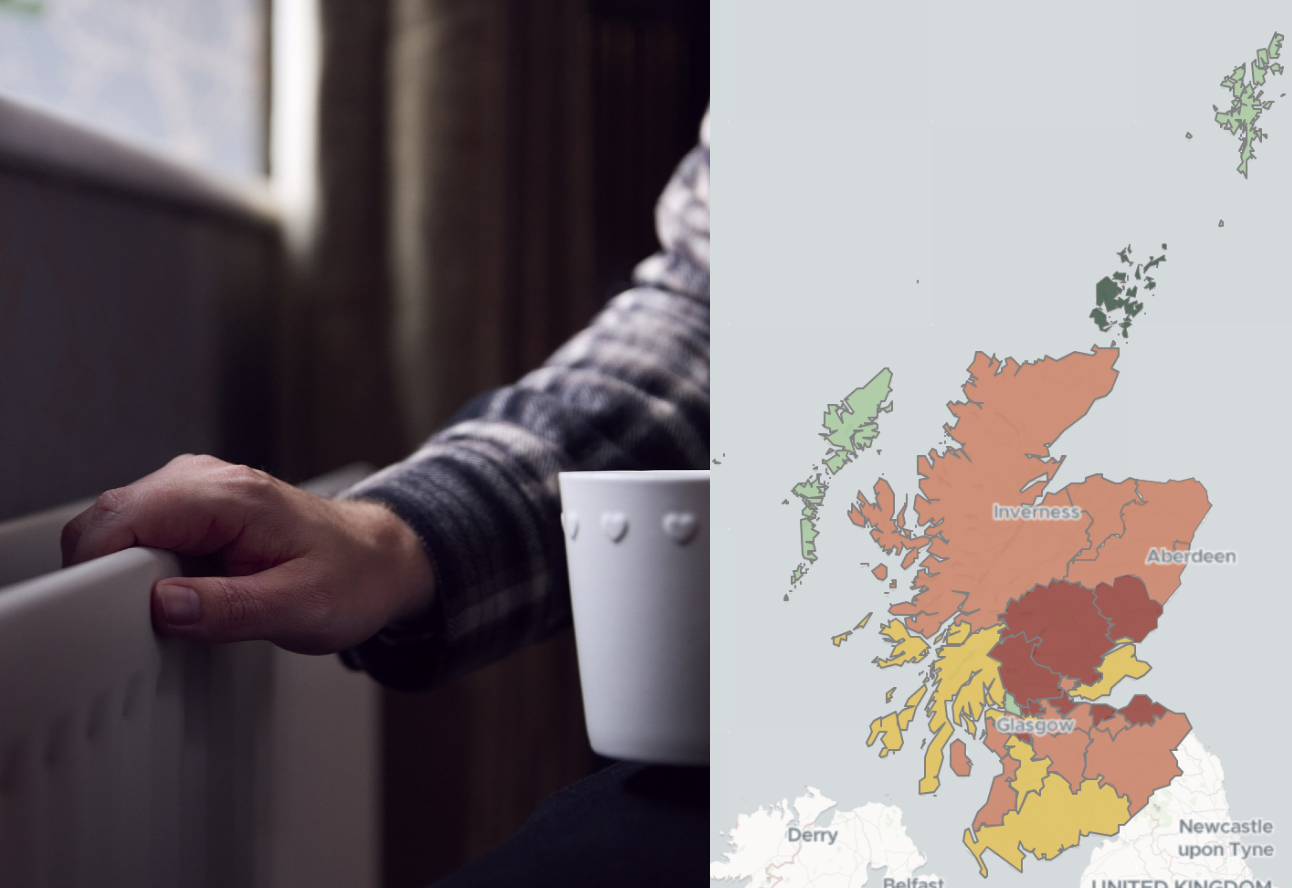
While Stirling and City of Edinburgh saw fuel poverty rates below 25%, Orkney Islands registered over 50% of households living in fuel poverty, followed by West Dunbartonshire at 43% and Na h-Eileanan Siar at 40%.
In total, nine Scottish local authorities recorded fuel poverty levels statistically higher than the national average. To help make sense of these disparities, the data team at Polimapper has visualised these findings by local authority, offering a clear look at the subnational variations across Scotland.
The data for the 2022-24 period also highlights disparities in extreme fuel poverty, ranging from 10% in East Dunbartonshire to 34% in the Orkney Islands. The Scottish House Condition Survey defines extreme fuel poverty as a situation where a household must spend more than 20% of its net income on fuel costs just to maintain a satisfactory heating regime.
The survey further notes that the mean household income is at its lowest in West Dunbartonshire, averaging £28,120 per year. This financial pressure mirrors the region’s energy deprivation, with 43% of households experiencing fuel poverty and 24% trapped in extreme fuel poverty.
Beyond income alone, Polimapper’s visualisation highlights that an average of 55% of Scottish dwellings failed to meet the Scottish Housing Quality Standard, with non-compliance peaking in East Lothian at 66%.
These figures arrived just two days before the newly appointed minister, Stephen Gethins, called for energy powers to be devolved to the Scottish Parliament, arguing that this could allow Scottish ministers to help further tackle fuel poverty.