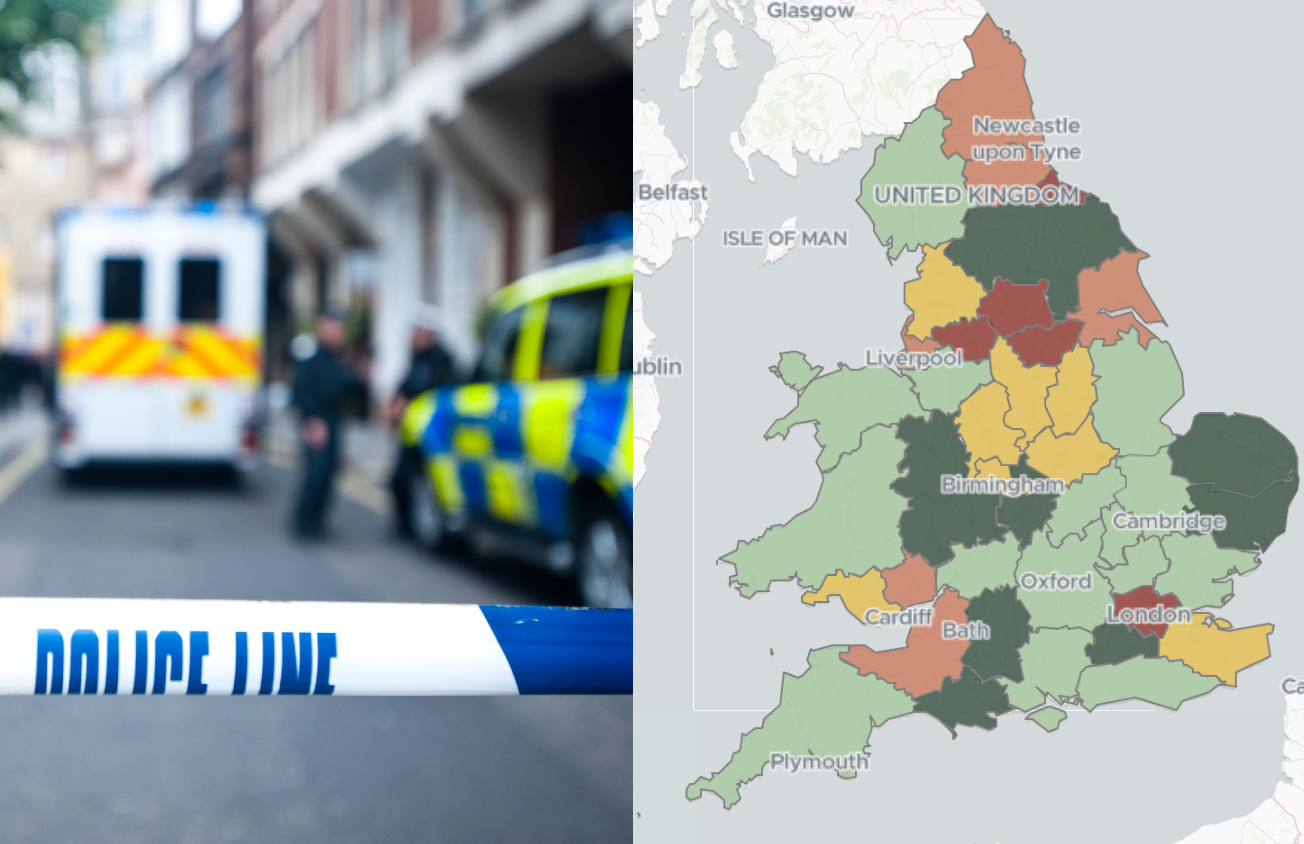
Police Forces in England and Wales could be reduced from 43 to as few as 12 under merger plans unveiled by the Home Office. The strategic mergers are part of a major reform package introduced this week by Home Secretary Shabana Mahmood, representing the most significant overhaul of the service since its founding.
The new model aims to consolidate the existing structure to streamline operations. Alongside these mergers, a new National Police Service (NPS) will be established to investigate the most complex and serious offenses. By centralising high-level investigations, the NPS will alleviate pressure on local forces, which are often less equipped for specialised casework, allowing them to refocus on “everyday” community crime.
“This White Paper sets out overdue reforms to policing in this country.” said Home Secretary Shabana Mahmood. “Taken together, they are the most significant modernisation in nearly 200 years. […] We face an epidemic of everyday crime. The crimes that tear at the fabric of our communities – like shoplifting, theft and anti-social behaviour – often go without consequence.”
The neighbourhood-focused model is intended to drastically reduce response times. Under the new mandates, officers will be expected to reach the scene of a 999 emergency within 15 minutes in urban areas and 20 minutes in rural regions.
Furthermore, the white paper is introducing rigorous new accountability standards. These include restoring powers to dismiss underperforming Chief Constables and providing the government with the authority to intervene in cases of underperformance.
To support these shifts, the government has also pledged new investments in cutting-edge technology and officer wellbeing.
However, organisations remain sceptical. Tiff Lynch, national chair at the Police Federation, noted that “Policing is broken and is breaking the officers who give everything to keep their communities safe.” Lynch warned that “fewer forces alone will not guarantee better policing. Skills, capabilities and equipment all need big investment.”
Comparing police force performance
The redrawing of police force boundaries across England and Wales will fundamentally change how policing data is recorded and aggregated at the local level.
While merging geographical areas changes the baseline for local comparisons, the new accountability framework will trigger the release of more robust datasets to track performance across the revised Police Force Areas (PFAs). The government’s white paper specifies that data regarding 999 response times, victim satisfaction, and public trust will be made publicly available “so communities can compare” performance.
Mapping these insights at the PFA level will enable cross-country geographical analysis of police effectiveness and service standards.
The visualisation below shows the current Police Force Area boundaries for England.